When people start building a small office setup, home lab, or even a growing business system, one question often comes up: Rackmount vs. Tower Server: Which Is Better? At first, both seem like just powerful computers, but their purpose and design are quite different. A tower server looks like a normal desktop computer and is usually used as a standalone system. A rackmount server, on the other hand, is designed to sit inside a server rack where multiple machines can be stacked together in an organized way. This simple design difference changes how they are installed, managed, and expanded in the future. Many beginners feel confused when choosing between them because both can handle similar tasks depending on hardware. However, the real difference is not just performance but also space, structure, and long-term usage. In this guide, we will break everything down in a simple and practical way so you can clearly understand which option fits better for your needs without any technical confusion.
What a tower server! Really Is
A tower server is basically a standalone machine built to work like a strong and reliable computer but designed for continuous operation. It looks similar to a desktop PC, but inside it has server-grade components that are made to handle heavier workloads and longer running hours. In the discussion of Rackmount vs. Tower Servers: Which Is Better, tower servers are often considered the simpler option. They do not need special racks or mounting systems, so you can place them almost anywhere with enough ventilation. This makes them popular in small offices, schools, or home setups where only one or a few servers are required. They are also easier to understand for beginners because they work in a familiar way. You plug them in, configure them, and they start running tasks like file storage or application hosting. However, when needs grow, managing multiple tower servers can become less organized and take up more physical space, which can make scaling harder in the long run.
Understanding Rackmount Servers in Simple Terms
A rackmount server is designed with a completely different idea in mind compared to a tower server. Instead of standing alone, it is built to slide into a server rack, which is a metal frame that holds multiple servers in a vertical stack. In the conversation of Rackmount vs. Tower Server: Which Is Better, rackmount systems are usually chosen for structured and larger environments. These servers are flat and compact, allowing many units to be placed together neatly. This setup is commonly seen in data centers where space efficiency and organization matter a lot. Rackmount servers are not just about saving space; they are also about managing many systems in one controlled environment. They are often used for web hosting, cloud systems, and enterprise-level applications. While they offer excellent scalability, they also require proper planning, cooling, and setup. This makes them slightly more complex than tower servers, but they provide a much more efficient solution when multiple servers are needed in a single location.
Physical Design and Build Differences
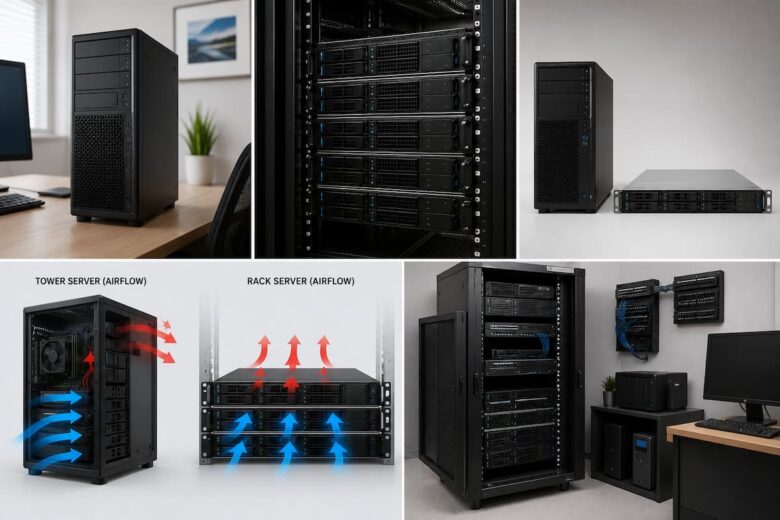
One of the most noticeable differences between rackmount and tower servers: which is better? is their physical design. A tower server stands vertically like a traditional PC, making it easy to place on the floor, desk, or shelf without additional equipment. This gives it flexibility in smaller environments. A rackmount server, however, is built in a flat, rectangular shape so it can fit into a rack system. This allows multiple servers to be stacked neatly on top of each other in a controlled structure. The design of rackmount servers focuses heavily on organization and density, while tower servers focus on simplicity and independence. Because of this difference, tower servers are easier for individual use, while rackmount servers are better for structured environments where multiple systems must work together. The physical layout also affects airflow, cable management, and accessibility. Understanding these design differences helps users choose a system that matches their space and technical setup more realistically.
Performance and Scalability Considerations
When comparing Rackmount vs. Tower Servers: Which Is Better? Performance alone does not depend on the shape of the server but on the internal hardware like processors, memory, and storage. Both tower and rackmount servers can be equally powerful if configured properly. However, scalability is where they differ significantly. Rackmount servers are designed for expansion. You can add more servers into the same rack system without changing the overall structure, which makes it easier to grow over time. This is especially useful for businesses that expect increasing workloads. Tower servers can also be upgraded internally, but scaling beyond a few machines becomes less organized. Managing many separate tower units can lead to clutter and inefficiency. Rackmount systems also allow multiple servers to work together in coordinated environments, which improves overall system capability. Tower servers, on the other hand, are more suited for smaller, stable workloads where expansion is not a major concern.
Cooling, Noise, and Environment Setup
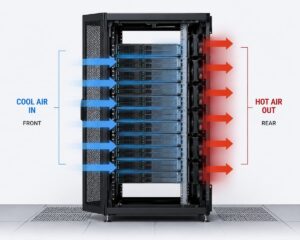
Cooling is an important part of any server setup, and it plays a big role in Rackmount vs. Tower Server: Which Is Better. Tower servers usually come with built-in cooling systems designed for a single machine, which makes them quieter and more suitable for office or home environments. They can operate without creating much noise disturbance, which is helpful in shared spaces. Rackmount servers are usually used in environments where multiple systems run together, producing more heat. Because of this, they rely on stronger cooling systems like server room ventilation and structured airflow inside racks. This makes them more suitable for dedicated server rooms rather than quiet offices. The airflow in rackmount systems is designed to move heat efficiently across stacked servers, but this also results in higher noise levels. So while tower servers are better for quiet environments, rackmount servers are better for high-density setups where performance and cooling efficiency matter more than noise levels.
Space Usage and Installation Experience
Space is another major factor when evaluating Rackmount vs. Tower Servers: Which Is Better? A tower server takes up its own physical space and must be placed individually, which can become a problem if multiple servers are needed. Over time, this can lead to a cluttered setup. Rackmount servers solve this problem by using vertical space inside a rack system, allowing many servers to be installed in a single organized structure. This makes them much more space-efficient in larger environments. Installation of a tower server is simple and requires no special tools, which is why beginners often prefer it. Rackmount servers, however, need proper mounting and structured setup inside a rack, which may require more planning. Once installed, rack systems provide a clean and organized layout that is easier to manage. This difference in installation approach often determines which system feels more practical depending on the user’s experience level and available space.
Maintenance and Long-Term Use
Maintenance plays an important role in deciding Rackmount vs. Tower Server: Which Is Better. Tower servers are generally easier to maintain because they are standalone units. You can open them easily, access components, and perform upgrades or repairs without affecting other systems. This makes them beginner-friendly and practical for small environments. Rackmount servers, while still maintainable, require more structured handling because multiple systems are placed close together. Maintenance must be done carefully to avoid disturbing other servers in the rack. However, rackmount systems are designed for organized maintenance in professional environments, so once the structure is understood, managing them becomes efficient. Upgrading rackmount servers is also more scalable, especially when dealing with multiple machines. Tower servers are simpler but may become harder to manage when the number of units increases. In the long term, rackmount systems offer better organization, while tower servers offer easier individual control.
Cost and Practical Value Overview
When discussing Rackmount vs. Tower Servers: Which Is Better, cost is not just about the server itself but the entire setup. Tower servers are often seen as more affordable for small setups because they do not require extra infrastructure like racks or advanced cooling systems. This makes them a practical choice for individuals or small businesses. Rackmount servers may involve additional setup requirements such as racks, cabling systems, and proper ventilation, which increases the overall setup effort. However, they offer better value when multiple servers are needed because everything can be managed in one organized system. Instead of buying separate standalone machines, everything fits into a single structured environment. This makes long-term expansion more efficient. So while tower servers are simpler and cheaper to start with, rackmount servers become more efficient when the system grows over time and requires better organization and scalability.
Common Use Cases in Real Environments
In real-world usage, Rackmount vs. Tower Server: Which Is Better depends heavily on the environment. Tower servers are commonly used in small offices, home labs, schools, or small businesses where only a few systems are needed. They are suitable for basic tasks like file storage, application hosting, and learning environments. Rackmount servers are used in larger environments such as data centers, cloud hosting systems, and enterprise networks where many servers need to work together. They are built for high-density computing and large workloads. While tower servers are focused on simplicity, rackmount servers are focused on structured performance and scalability. Both serve important roles depending on the situation. A small business might start with a tower server and later move to rackmount systems as their needs grow. Understanding these use cases helps in selecting the right system without overcomplicating the decision.
Final Decision: Which One Fits Better
When deciding between a rackmount vs. tower server, which is better? There is no single correct answer. The right choice depends entirely on your needs, space, and future plans. If you want something simple, easy to set up, and manageable without extra infrastructure, a tower server is usually the better option. It works well for smaller environments and users who prefer simplicity. If you need a system that can grow, handle multiple machines, and stay organized in a structured environment, rackmount servers are a better fit. They are designed for scalability and long-term efficiency. Both options are reliable and widely used, but they serve different purposes. The best decision comes from understanding your current situation and how much you expect it to grow in the future.
FAQs
1. What is the main difference between rackmount and tower servers?
The main difference is their structure and usage style. Tower servers are standalone machines like desktop computers, while rackmount servers are designed to be installed in racks for organized multi-server setups.
2. Which server is better for beginners?
Tower servers are usually better for beginners because they are easier to install, manage, and maintain without needing special infrastructure or technical setup.
3. Can rackmount servers be used in small offices?
Yes, but they are generally more suitable for larger environments. Small offices can use them, but they may not fully utilize their scalability features.
4. Do rackmount servers always perform better than tower servers?
Not necessarily. Performance depends on hardware, not shape. Both can perform equally well if configured with similar components.
5. Which server is easier to maintain long-term?
Tower servers are easier for individual maintenance, while rackmount servers are better for organized maintenance in larger systems.